MISDIAGNOSING WATER HEATER ISSUES
It is often easy to tell when a water heater needs to be repaired but there are several scenarios that can lead to people misdiagnosing water heater issues. If you don’t have hot water, that’s a good sign the water heater isn’t working, but what may seem like a problem with the water heater issue isn’t always an actual result of a water heater malfunction. This is why we always take a little extra time when someone calls us for water heater service to try and figure out what exactly is going on and whether it is something to do with the water heater or something else. In this blog, we are going to discuss several different examples of situations where it seems like the water heater is the problem but it actually isn’t.
THE MIXING VALVE
A broken mixing valve on a faucet is probably the number one cause of a water heater misdiagnosis. For those who don’t know, a mixing valve is used to mix the right amount of hot and cold water that comes out of the faucet. If the mixing valve is not working correctly, that could lead to a situation where there is no hot water coming from the valve to the faucet. When that happens, most people assume that the problem is the water heater. One of the things we try to determine when someone calls us for service is whether there is a lack of hot water throughout the entire residence or if it is just from that one specific faucet. If it is just from the one faucet but there is hot water in the rest of the home, then the issue isn’t the water heater. In that case, we will recommend they call a full-service plumber, which can save them time and money.
PLUMBING LEAKS
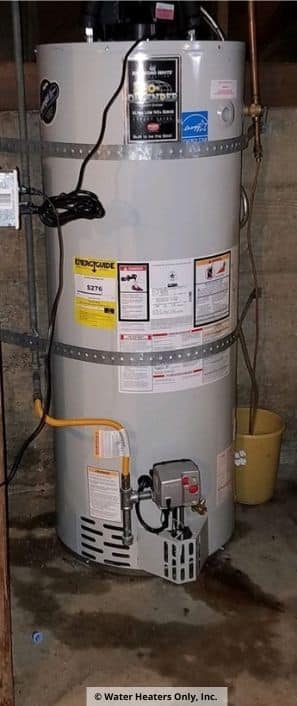
Another issue we run into is when someone calls us because there is a pool of water underneath or nearby the water heater and they naturally assume the problem is the water heater (see above photo). While it is often the case that a pool of water underneath the water heater means it has failed, the water could be coming from a leaky pipe that may be located near the water heater, whether it is in the wall or just located near the water heater. It could even be a slab leak, which is a leak in the foundation of the home. Also, if a pipe is broken somewhere between the water heater and a faucet in the home, that could lead to no hot water coming into the home and again could lead to an improper diagnosis of a water heater that isn’t working. While it is harder to diagnose a problem like this without having one of our technicians go and look at it, we do try to gather as much information as possible beforehand to see if it really is a water heater issue. If the water heater is in a pan, we will ask if there is water in the pan. Also, we may ask the person calling us to look and see where the water is coming from. If they see that the wall behind the water heater is wet, then that may be a sign that it isn’t the water heater that is leaking.

HIGH WATER PRESSURE
One last issue we would like to discuss is a leak resulting from high water pressure. If you are familiar with a water heater’s design, you may know what the temperature and pressure relief valve is and where it is located on the water heater. The temperature and pressure relief valve (or T&P valve) is typically located on the top of the water heater, though it sometimes is on the side of the water heater. It is a copper pipe that either runs into the wall near the water heater or, depending on the local plumbing code, it may simply run either into the pan at the bottom of the water heater or just on to the ground in front of the water heater.

The T&P valve is designed to be a safety valve if the water heater gets too hot or the pressure gets too high. If this happens, water will come out of the T&P valve and this could make a puddle at the bottom of the water heater making it look like the water heater itself is leaking. If this happens, it doesn’t mean the water heater is malfunctioning. In fact, the T&P valve is operating as it should. However, if the water pressure remains too high then a pressure regulator may need to be installed or repaired if there is currently one already in use. A pressure regulator is designed to keep the incoming water pressure at a safe level.
We hope this has been helpful information as we feel that the more people know about their water heater, the better chance they have not misdiagnosing water heater issues. That goes for being able to understand what may be causing a leak and whether you may need your water heater repaired or replaced. Of course, always give us a call if you are not sure and have a question about your water heater. You can also check out our blog on how to best maintain your water heater. by clicking here. Remember, we are available seven days a week to help you in any way we can so give us a call 24/7/365 at 833-379-8800.