MISDIAGNOSING WATER HEATER ISSUES

MISDIAGNOSING WATER HEATER ISSUES

It is often easy to tell when a water heater needs to be repaired but there are several scenarios that can lead to people misdiagnosing water heater issues. If you don’t have hot water, that’s a good sign the water heater isn’t working, but what may seem like a problem with the water heater issue isn’t always an actual result of a water heater malfunction. This is why we always take a little extra time when someone calls us for water heater service to try and figure out what exactly is going on and whether it is something to do with the water heater or something else. In this blog, we are going to discuss several different examples of situations where it seems like the water heater is the problem but it actually isn’t.

THE MIXING VALVE

A broken mixing valve on a faucet is probably the number one cause of a water heater misdiagnosis. For those who don’t know, a mixing valve is used to mix the right amount of hot and cold water that comes out of the faucet. If the mixing valve is not working correctly, that could lead to a situation where there is no hot water coming from the valve to the faucet. When that happens, most people assume that the problem is the water heater. One of the things we try to determine when someone calls us for service is whether there is a lack of hot water throughout the entire residence or if it is just from that one specific faucet. If it is just from the one faucet but there is hot water in the rest of the home, then the issue isn’t the water heater. In that case, we will recommend they call a full-service plumber, which can save them time and money.

PLUMBING LEAKS

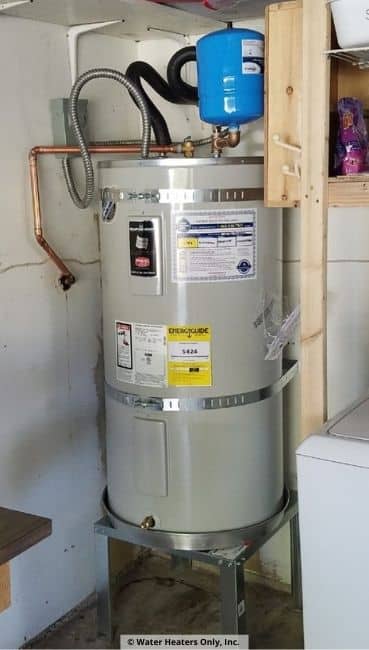
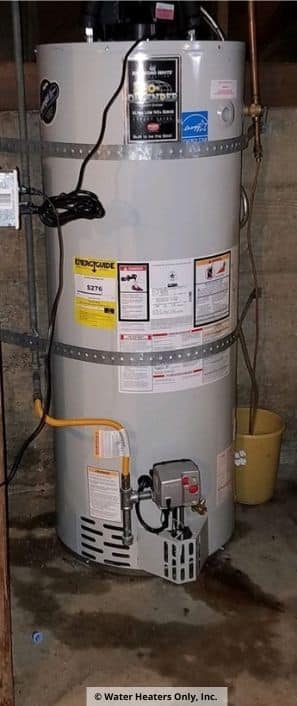
Another issue we run into is when someone calls us because there is a pool of water underneath or nearby the water heater and they naturally assume the problem is the water heater (see above photo). While it is often the case that a pool of water underneath the water heater means it has failed, the water could be coming from a leaky pipe that may be located near the water heater, whether it is in the wall or just located near the water heater. It could even be a slab leak, which is a leak in the foundation of the home. Also, if a pipe is broken somewhere between the water heater and a faucet in the home, that could lead to no hot water coming into the home and again could lead to an improper diagnosis of a water heater that isn’t working. While it is harder to diagnose a problem like this without having one of our technicians go and look at it, we do try to gather as much information as possible beforehand to see if it really is a water heater issue. If the water heater is in a pan, we will ask if there is water in the pan. Also, we may ask the person calling us to look and see where the water is coming from. If they see that the wall behind the water heater is wet, then that may be a sign that it isn’t the water heater that is leaking.

HIGH WATER PRESSURE

One last issue we would like to discuss is a leak resulting from high water pressure. If you are familiar with a water heater’s design, you may know what the temperature and pressure relief valve is and where it is located on the water heater. The temperature and pressure relief valve (or T&P valve) is typically located on the top of the water heater, though it sometimes is on the side of the water heater. It is a copper pipe that either runs into the wall near the water heater or, depending on the local plumbing code, it may simply run either into the pan at the bottom of the water heater or just on to the ground in front of the water heater.

The T&P valve is designed to be a safety valve if the water heater gets too hot or the pressure gets too high. If this happens, water will come out of the T&P valve and this could make a puddle at the bottom of the water heater making it look like the water heater itself is leaking. If this happens, it doesn’t mean the water heater is malfunctioning. In fact, the T&P valve is operating as it should. However, if the water pressure remains too high then a pressure regulator may need to be installed or repaired if there is currently one already in use. A pressure regulator is designed to keep the incoming water pressure at a safe level.

We hope this has been helpful information as we feel that the more people know about their water heater, the better chance they have not misdiagnosing water heater issues. That goes for being able to understand what may be causing a leak and whether you may need your water heater repaired or replaced. Of course, always give us a call if you are not sure and have a question about your water heater.  You can also check out our blog on how to best maintain your water heater. by clicking here. Remember, we are available seven days a week to help you in any way we can so give us a call 24/7/365 at 833-379-8800.
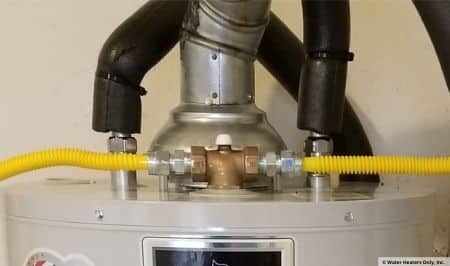
The WATTS 210 Automatic Gas Shutoff Valve

THE WATTS 210 AUTOMATIC GAS SHUTOFF VALVE

In this blog, we will be talking about the Watts 210 automatic gas shutoff valve. Most people have never heard of this valve, so we thought it would be a good idea to explain what it is and what it does to help potentially lessen the damage from a malfunctioning water heater.

While many are aware of the temperature and pressure relief valve (T&P valve) on their water heater and what it does, the Watts 210 automatic gas shutoff valve isn’t as common and thus isn’t as well known. Basically, the Watts 210 is an immersion-type valve used to protect against overheating water in a water heater. The valve is installed where the T&P would normally be installed on a water heater and it has a thermostat that goes inside the water heater. The gas line is run into the Watts 210 from the gas source and then run from the Watts 210 to the gas control on the water heater.

SO HOW DOES IT WORK?

The Watts 210 is a self-contained device that includes a manual reset button, a trip latch assembly and a thermostat. As we stated earlier, the valve is installed where the T&P valve would normally be installed on the water heater. The thermostat on the valve itself goes into the water heater and is set for 210 degrees. That means that if the temperature of the water in the water heater rises above 210 degrees, the valve shuts off the gas supply to the water heater. This helps to stop the temperature from getting any hotter in the water heater and helps to reduce any further damage to the water heater and possibly even the surrounding area if the water heater failed due to the increased thermal expansion.

As we said, the Watts 210 is installed where the T&P is located and then typically a T&P valve is installed on the cold water line outside of the residence, often right near where an outside faucet may be located. This is done because even though the Watts 210 shuts off the gas, there still needs to be a relief valve located somewhere on the water line to reduce the possibility of damage to the water heater and the water pipes themselves.

At this point, you may be wondering: If the Watts 210 shuts off the gas supply and acts as a T&P, why aren’t they part of a standard installation? The reason is twofold: First, the T&P works just fine as the main source of relief in the case thermal expansion occurs. Second, the part itself is not cheap and involves more labor and time, which can add a substantial amount to a standard water heater installation. The Watts 210 automatic gas shutoff valve is typically used if the T&P line cannot be run to the exterior of the residence as required by many state plumbing codes, especially in California. We often see this when the water heater is located in an inside closet such as in a hallway or the kitchen. In this situation, the water that comes out of the T&P has nowhere to go and can cause water damage if it is a substantial amount of water and goes undetected. In that case, a Watts 210 automatic gas shutoff valve is recommended.

As always, if you have any questions about this subject or your water heater in general, please call us 24 hours a day, seven days a week at 833-379-8800. We are always happy to answer any questions you may have or even schedule an appointment for one of our water heater technicians to come and take a look at your water heater.

“Raising the Bar” 25th annual Cal NARPM Conference

W.H.O. at the 25th annual Cal NARPM Trade Show and Conference

If you follow our blog posts or follow us on social media, then you probably know that we here at Water Heaters Only, Inc. belong to many different organizations and associations. Especially when it comes to connecting with potential clients for our Preferred Client program, these groups provide a great way to network and maybe even have a little fun. That was the case last week when we attended the NARPM California State Chapter 25th annual Conference & Trade Show in Palm Springs, CA. For those who may not know, NARPM is the National Association of Residential Property Managers and we proudly belong to several chapters in both California and Arizona.

Every year the state chapter hosts its annual conference where members can get together and attend seminars to learn about the latest hot topics in the property management world and get out of the office for a few days as well. This year’s theme was “Raising the Bar”. The conference also has a trade show where vendors such as Water Heaters Only, Inc. can give out information, say “Thanks!” to current clients and meet with prospective clients as well.

Most vendors hand out various freebies and even have a raffle prize or two. Of course, we are no different and handed out cuties and chocolate gold coins and raffled off a wonderful handbag, which you can see in the above picture on the left. We also had our Plinko game and people who stopped by had a chance to win some fun prizes!

All in all, it was great time at the Riviera Hotel in Palm Springs. If you are a property manager and are interested in our Preferred Client program, please visit our page here. If you are interested in learning more about NARPM, you can visit this page.

Water Heater Replacement Plumbing Codes

We here at Water Heaters Only, Inc. always make sure we tell our customers that we do all of our jobs “up to code”, but we realize many people don’t always know what that means. The code we are referring to is the California Plumbing Code. If you have ever had to do any major renovation or repair on your home, you likely had to get a permit from the city and that meant you had to follow certain guidelines, or codes, for the work to be done. All incorporated cities have a building inspection and/or code compliance department. If they don’t, then that job will typically fall to the county. Either way, there are codes for just about every type of repair and renovation and that includes water heater plumbing codes.

According to the International Association of Plumbing and Mechanical Officials, the codes “attempt to minimize public risk by specifying technical standards of design, materials, workmanship and maintenance for plumbing systems.” Basically, these codes ensure that all repairs, replacements and installations are safe and effective, whether it’s installing a new bathroom or a water heater. Water Heaters Only makes sure that every one of our technicians are aware of all codes and any recent updates and we make sure to follow these codes as we have been doing now for over 50 years. For a full rundown of the required codes for water heater installations, visit our blog here.

Despite our knowledge of the plumbing codes, we realize that many people aren’t aware of them and so we thought it would be useful to go over some of the plumbing codes in the hopes of educating the public about how and why we go about performing our repairs and installations. However, before we go any further, it should be noted that each city and county can choose to implement these codes in different ways meaning that what is required in one city may not be required in another. It can get a little confusing, which is why it is so important to use a company that is up-to-date on all the latest codes.

CHAPTER 6: WATER SUPPLY AND DISTRIBUTION


PRESSURE REGULATORS

While most of our California Plumbing Code (CPC) blogs will be about information in Chapter 5: Water Heaters (obviously), in this post we will be discussing water pressure and that is covered in Chapter 6, section 608. Just for starters, water pressure is measured in PSI, or pounds per square inch. Whenever we go out to any

a water valve on a water pipe

job whether it is for a repair or an installation, we always check the PSI. This is useful because it can help determine the cause of a problem such as a leak or a water heater failure. According to CPC Section 608.2, whenever water pressure exceeds 80 PSI, a pressure regulator is required if there isn’t already one installed.

A pressure regulator does exactly what it sounds like: it regulates the water pressure in the plumbing. High water pressure can not only damage a home’s plumbing but can also damage a water heater as well. Most homes have one, but not always. If we find a home has water pressure above 80 PSI and there isn’t a pressure regulator, we will always offer to install one. And if there is one but the pressure is still high, we will check to see of the current one has failed. Not only can any water pressure above 80 PSI be detrimental to the water heater and plumbing, it will also void the warranty on most water heaters. For more information about water pressure and pressure regulators, please read our blog here.

EXPANSION TANKS

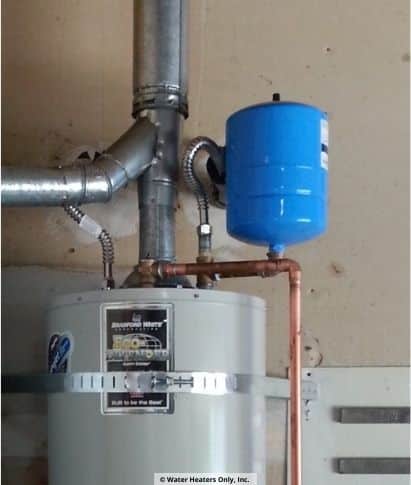
Expansion tanks are an important part of minimizing damage to your water heater and plumbing and they are required in certain situations by the CPC. Basically, an expansion tank is a metal “bottle” that is used to relieve when thermal expansion occurs. The expansion tank had a bladder inside of it and when thermal expansion occurs, the expansion can be relieved temporarily by going into the tank. When the thermal expansion has stopped, the excess water goes back into the plumbing.

a water heater heater with an expansion tank

In the above section about pressure regulators, the CPC states that an expansion tank must be installed when a pressure regulator is installed. That’s because a pressure regulator causes the water to not be able to go back to the city main and is essentially locked into what is known as a “closed loop” plumbing system. It’s a closed loop because the water and thermal expansion, when it occurs, can’t go back to the city’s main water system located outside the home. In Section 608.3, the CPC also states that expansion tank must be installed if there is a check valve, backflow preventer or “other normally closed device that prevents dissipation of building pressure back into the water main”.

PRESSURE RELIEF VALVES

Section 608.3 also mentions the use of pressure relief valves in conjunction with expansion tanks. Not only must an expansion tank be installed when part of a “closed loop system”, there must also be a combination temperature and pressure (T&P) relief valve. For water heaters, these are typically located on the top of the water heater (though not always). Take a look at the picture above if you aren’t sure what the T&P looks like. These relief valves are set to relieve water and pressure after a certain PSI or temperature has been reached. These pressure relief valves need to also have a discharge pipe (Section 608.5), which has its own requirements such as:

  • The discharge pipe should discharge independently by gravity either into the drainage system or to the exterior of the building.
  • It must discharge in such a way that does not cause bodily harm or structural damage.
  • It cannot discharge into a water heater pan.

This is why you will typically see the T&P valve connected to a pipe that runs either alongside the wall to the outside or through the wall where it will be allowed to discharge in a safe place where no one may get hurt.

In conclusion, we hope this has been helpful information. One final note: As we mentioned in the beginning of this blog, each city may decide to implement the plumbing codes differently dependent on the situation. For example, in some areas the city inspector won’t require an expansion tank to be installed as long as there is a working T&P valve present. Also, an inspector may allow a T&P drain line to just discharge to the floor if the water heater is located in the garage. That’s why it’s so important to hire a company that knows the latest codes. For any further questions about water heater plumbing codes or to schedule an appointment with one of our water heater experts, just give us a call 24 hours a day, 7 days a week at 833-379-8800.

Turn Off The Gas Supply To The Water Heater

How Do I Turn Off The Gas Supply To The Water Heater

the gas shut off valve to a water heater

How do I turn off the gas supply to the water heater? This is one question we are frequently asked by our customers. It is a great question and one that every homeowner should be educated in, just in case problems arise with their water heater.

You might smell gas coming from your water heater, it might not be performing as usual or it the water heater may be leaking and it would be a good idea to know how to turn off the gas.

The gas can be turned off from the outside gas meter, which shuts off all gas to the house or at the water heater itself, which just turns off the gas supply to the water heater. Knowing how to shut off the gas from both places can really come in handy.

To turn off the gas supply to the water heater:

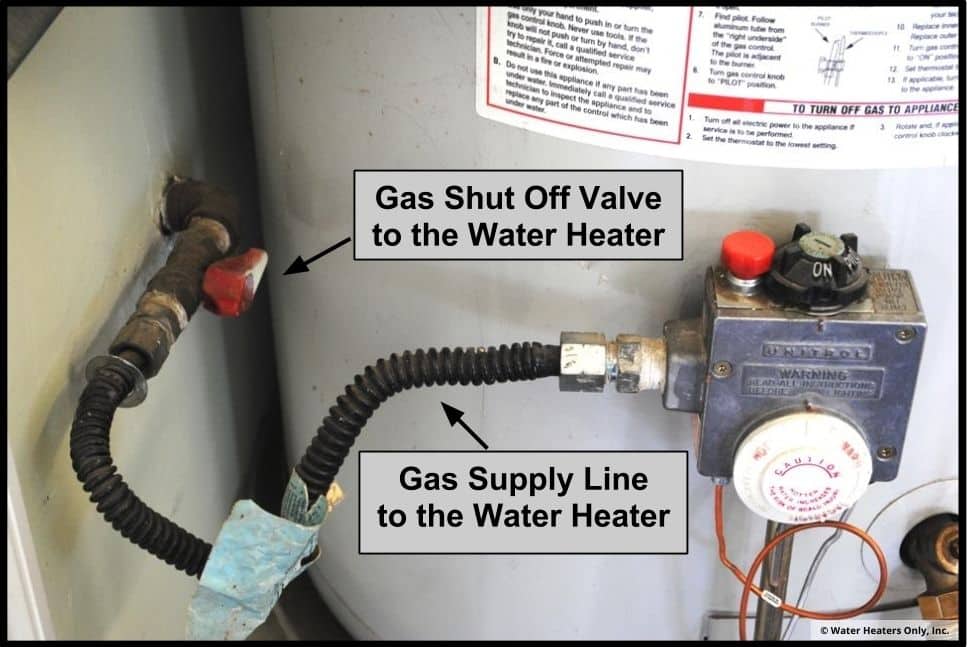
All appliances that require water or gas have a separate shut of valve usually within a few feet of the appliance. To find a water heaters’ gas shut off valve look for a single handle valve that would usually be located at the bottom of the unit about a foot or two out. The valve will look similar to the one in the image below.

the anatomy of the gas line on a water heater.

Turn this valve in the clockwise position to turn the gas off. If you can’t get the gas valve to turn, can’t find the gas valve, or if there are any other problems, there is a second option which is to turn the gas off to the whole house.

To turn off the gas supply to the whole house:

Finding the gas meter shut off valve can sounds daunting, but it can actually be pretty simple. The gas meter shut off is located right next to the gas meter that is found on the exterior of the house as shown below. The gas valve is on when it is parallel to the incoming gas line. When the valve is turned a quarter turn so that it is perpendicular, then the gas line is closed and the flow of gas is off. Typically, this valve can only be opened and closed with a wrench. In case of emergency or if you smell gas, exit the home and contact your gas provider.

If you are concerned about how to turn off the gas supply to the water heater or any of the signs above you can call and speak with a water heater expert 24 hours a day 833-379-8800 or check our FAQ’s to read more about common water heater problems.

By John Heaters Google + | Facebook