
Halloween Horror Stories

Truly Terrifying Tales from our Techs!

It’s Halloween time again and that means it’s time for another round of Halloween Horror Stories from our techs in the field. Water Heaters Only, Inc. has been in business since 1968, so we have seen just about every type of water heater situation there is, but sometimes even we get a little spooked by what we find when we check out a water heater. Here are just a few of the creepy and sometimes downright scary water heaters we have seen in the last year:
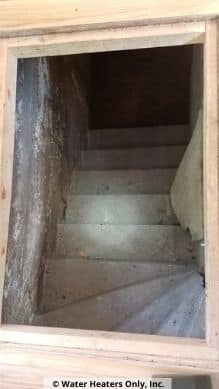
A scary stair way to see the water heater
“I have to go down there?”
File these under: “I think we found the problem!”
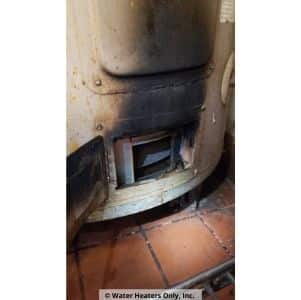
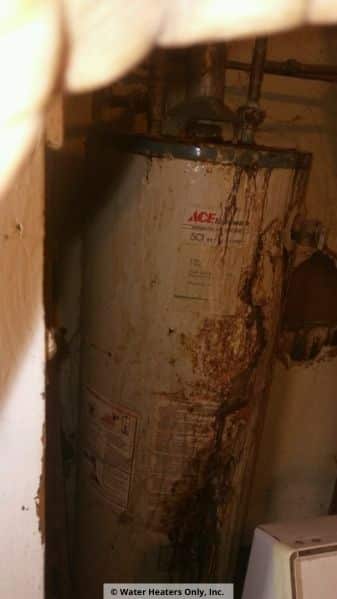
This water heater needs to be replaced. Look at the rust!

The spider webs on the way to this water heater are wild.
“No, YOU out your hand back there!”

So there you have it. Just another small sample of the truly terrifying situations our technicians have to deal with from time to time. We hope you have enjoyed this edition of Halloween Horror Stories, but before we go, we would like to remind you that Halloween is not only the time for spooks and frights, it is also the time when the air turns cold and so does the ground water feeding your water heater. This can lead to water heater issues, especially if your water heater is old or if it is already struggling due to the amount of sediment that has collected in it. Basically, when the water coming into your water heater gets colder, the water heater has to work harder to bring the water up to temperature. Here are a few winter water heater tips to help with this situation:

  • Turn up your thermostat a few degrees. If you do that, make sure you check the temperature at a faucet to make sure it isn’t so hot that someone may get scalded. Also, never turn it up past 140 degrees F.
  • Make sure that the hot and cold pipes attached to your water heater are insulated. You should also consider having any pipes that are under the house to be insulated as well.
  • If you haven’t done so recently, you may consider flushing your water heater to remove the sediment that can accumulate in the water heater. If there is too much sediment, the water heater will have to work harder to heat the water and there will not be as much room in the water heater for the hot water, potentially leaving you at risk of running out of hot water sooner than expected.
  • If your water heater is located in the garage or in an outside shed or closet, check that there aren’t any drafts that could make the ambient air colder than it has to be.

If you have questions about any of these recommendations, please feel free to call us 833-379-8800 24 hours a day, 7 days a week to talk to one of our water heater experts. They can answer any questions you may have or even set up an appointment for one of our technicians to come out and inspect your water heater for you. Until next year, Happy Halloween!
California Water Heaters And Earthquakes

Is Your California Water Heater Safe from Earthquakes

Earthquake strapping a water heater is critical in California, where earthquakes are a regular occurrence. From Los Angeles and San Diego, to San Francisco and Sacramento, earthquake damage in homes and businesses can happen without warning, and most of  us don’t think about our water heater’s safety before an earthquake.

In California, the law requires that your gas or electric water heater must be properly attached to a wall, so that it will not fall or tilt to mush during an earthquake event and lead to a fire or a flood of your home. All homes, multi-family properties, offices, apartments and public buildings are required to have their water heater strapped securely.

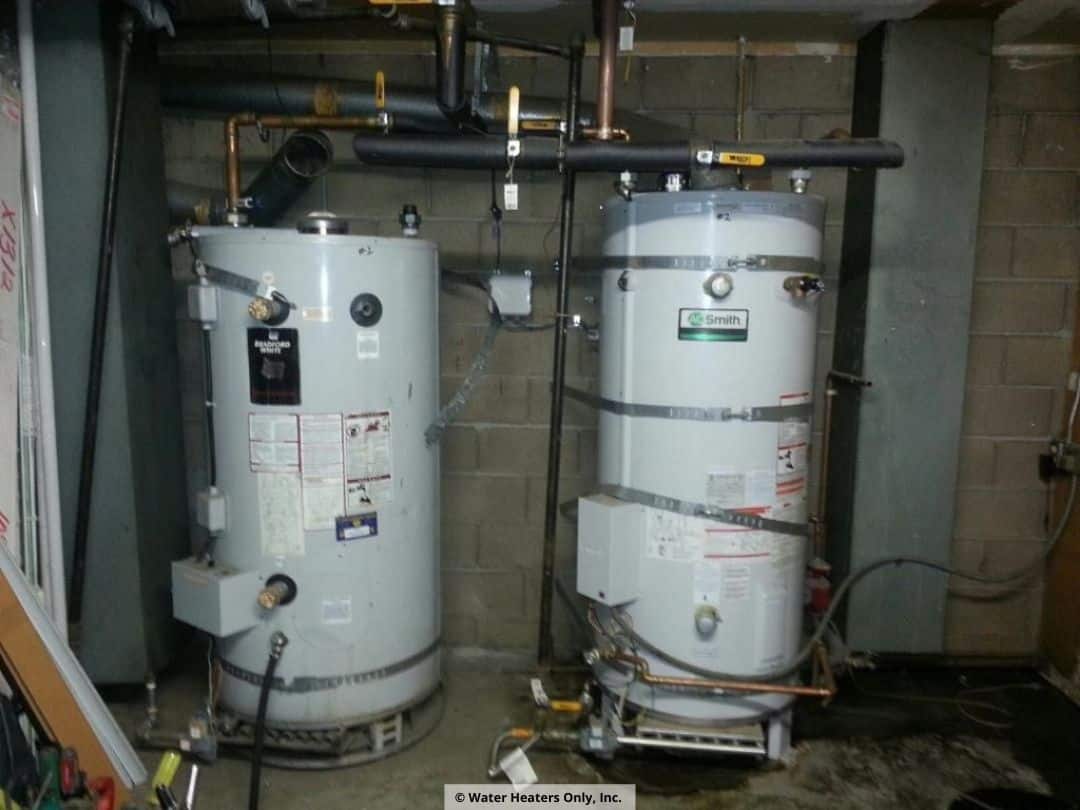
In the first water heater photo, the water heater is NOT properly strapped and in the event of an earthquake will freely move / shake from side to side.

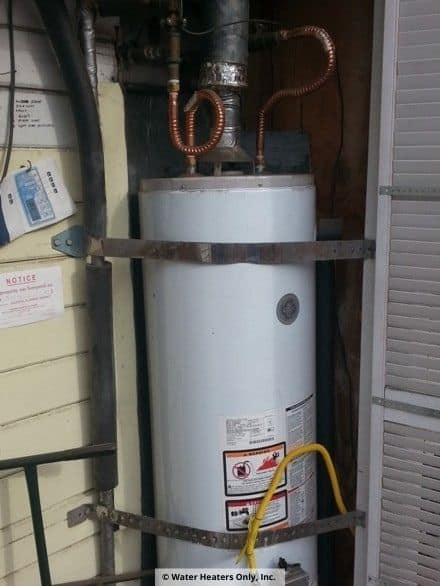
However in the second water heater photo, this water heater, on the other hand, is properly strapped. As you can see, it will have little, to no side-to-side movement in the event of an earthquake. It will also not fall off it’s platform.

After an earthquake the water heater also holds available cooking and drinking water in the event of an extended power outage. The new laws regarding strapping help to keep the tanks in place and strapping types and attachment hardware rules have been upgraded for safety since the Loma Prieta quake of 1989 and the Northridge earthquake of 1994.

If your water heater is older, you will want to have it inspected by a professional water heater installer to ensure that you have the current and safe strapping that is necessary. The correct connectors and lines can be installed and strapping and wall attachments can be upgraded.

Things To Know About Water Heater Strapping

  • 30, 40 & 50 gallon water heaters require 2 straps
  • 75 & 80 gallon water heaters require 3 straps
  • 100 gallon water heaters require 4 straps
  • Strapping must be placed properly- the top 1/3 and the lower 1/3 of the water heater must be strapped to prevent rocking and tipping.

If you would like to inspect your water heater earthquake strapping yourself and find out if it is current to California law, earthquakecountry.org offers some good tips for proper attachment.  https://www.earthquakecountry.org/step1/waterheater/

Water Heaters Only, Inc. has installed thousands of water heaters to California earthquake code standards, and we are happy to help you secure your water heater, for the safety of your family and your neighborhood.

After a quake, you want to check your water heater strapping, and be assured that there is no gas lines leaking that can start a devastating fire and burn your home, as well as checking that the water heater has not fallen over and leaking water lines have flooded your home, resulting in costly repairs.  With proper earthquake strapping, your home will be much less likely to be devastated by an unfortunate water heater issue due to earthquake tilting.

These are 2 large commercial water heaters in a basement. One is strapped, but not properly and the other one is not strapped at all. This is a disaster waiting to happen, at least the tank with straps is less likely to cause a major gas leak, than the one with no straps. 

Are you wondering if your water heater is up to code? Give us a call at [phone-local] and a trained technician will come out to your home and properly assess your water heater, and bring it up to code.

Home Water Heater Safety and Wildfire Preparedness

California Fire Prevention for Homeowners- Home Water Heater Safety and Wildfire Preparedness

With so many recent fires in California, the need to ensure our homes are as safe as possible is paramount. Most of us rarely think about our hot water heater as being an issue when it comes to a fire- after all, they are for the most part ‘out of sight, out of mind.’ With many families having suffered unimaginable loss during the wildfires, it is important to take a serious look at the appliances in our home to be sure they are safe and do not pose a fire hazard. Whether you live in the San Francisco Bay Area, Los Angeles, Sacramento or San Diego, CA wildfires throughout the state are a summer risk.

A few simple checks on your major appliances can potentially protect your family and neighborhood and help prevent a house fire or wildfire.

Could a hot water heater fire happen here?

In 2015, a catastrophic water heater fire did happen- The Rocky fire in Lake County, CA., which scorched nearly 70,000 acres and destroyed 43 homes near Clear Lake- the result of a problematic gas hot water heater in an outbuilding, according to Cal Fire officials. This is a prime example of why it’s important to perform annual inspections and maintenance for water heaters. This can help ensure the water heater is properly functioning and limit the potential for a problem to occur. It is all part of thinking about the home and family’s safety.

Existing Hot Water Heater Fire Risks

The risks of potential fire from a water heater usually come from a few things that can be easily remedied by the proper installation by licensed plumbing company and an annual inspection by the homeowner.

  • Ventilation- Free and proper household air flow matters. Adverse negative air pressure can create a potentially flammable situation with a gas water heater.
  • Combustibles- keep flammable items away from your water heater, and leave space around it without any clutter or debris. These can fuel a fire quickly.
  • Disaster Proof- California earthquakes happen with some regularity. Be sure to have your water heater properly strapped.
  • Covers & Valves- Covers should always be kept in place and fitted properly. Valves should be working correctly and not leaking, cracked or worn. Testing pressure relief valves is important.
  • Improper or Damaged Wiring- Wiring needs to be correctly maintained to prevent sparks or ignition in unexpected places. One spark can start a fire in your home.

Existing Homes- Inspections and Proper Water Heater Care to Prevent California Wildfires

INSPECT YOUR WATER HEATER ONCE A YEAR- Most people don’t think about their water heater as a potential fire hazard, or even think of it until it stops working or they discover a leak. It can save you money and even save your home from a fire igniting if you take the time to thoroughly inspect your water heater to make sure there are no problems. When you clean up the yard and clear defensible space, include a check of your appliances to the to-do list for fire prevention.

The steps to check your water heater can be found in this simple and informative video. During this check, something like a small gas leak may be discovered and corrected before it becomes a major fire hazard.

KNOW HOW TO SHUT YOUR WATER HEATER OFF – This is helpful for so many reasons, but it is especially helpful in regards to fire danger and prevention. That’s because if you happen to smell gas or discover a gas leak in your water heater, you will want to get the gas shut off as soon as possible. Learn how to properly shut down your water heater here.

New Home Builds -Proper Installation by a Professional

With all of the new homes being built after the devastating California fires, many people are choosing what type of water heater they will want in their new home, and seeking a trustworthy company to install the hot water heater correctly. It is imperative for safety, that a professionally licensed service provider installs your new water heater.

With many options such as tankless water heaters, gas or electric hot water heaters and high efficiency water heaters, the choices for a new installation are plentiful and speaking with a water heater installation and service company knowledgeable in all the best choices can help you choose just the right water heater for your new home.

Having a trusted water heater company install your water heater, and advise on the maintenance and repairs for you can protect your home from accidental fire. Doing your proper yearly inspection, even on a new water heater, ensures that your home and family are protected from an unexpected fire. Have questions about your water heater? Give us a call at 833-379-8800

Water Heater Habits

7 Habits of Highly Successful Water Heater Owners

Water Heater Maintenance Tips

Out with the old and in with the new!

Have you thought much about your water heater lately? Most people do not think much about their water heater until they have a problem. Typically the first thing that is noticed is a lack of hot water, and then the investigating begins. Here are 7 tips that can help you become a successful water heater owner and keep you one step ahead so you do not end up spending valuable time dealing with a broken water heater. The benefit of being a successful water heater owner is longer tank life expectancy, lower energy bills, and the potential for little or no damage to occur as a result of water leakage. Also, being prepared with information will make the entire process easier when your tank needs to be repaired or replaced.

1. Know where your water heater is located and have clear access to reach it. This may sound simple, but sometimes it’s tucked away in an attic or basement and not easy to reach and after many years since a water heater is not something people often think about it can be forgotten – until there is no hot water.

2. Know what type of water heater you have, ie. natural gas, electric, propane or solar. Also knowing whether you have a storage tank type (hint: this is the most common type) or a tankless type water heater is helpful. Write down the model number and serial number of your water heater or at least know where this information is on the tank, it has the age and gallon capacity coded into it and is important for warranty purposes.

3. Know how to turn off the fuel or power supply to your water heater, once you know which type of unit you have, make sure you know how to turn off the gas or electricity to the unit. There should be a gas valve or a disconnect switch within a few feet of the water heater. It’s also a good idea to know where your main gas shut off valve is or which breaker is for the water heater in case the shut off near the water heater doesn’t work. If you need any special tools to turn the valves off or to open the break box keep those nearby and in clear sight. When you have water leaking all over it’s easy to panic, especially if it’s causing damage. Doing a little upfront work so you are prepared will make a big difference in this situation.

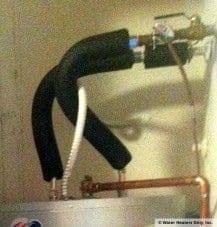
Insulation on the hot and cold lines of a newly installed water heater.

4. Know where the water shut off valve to the water heater is. Again, if you need special tools to turn the valve off have them nearby along with a stepladder in case the valve is above the water heater and you need to turn the water off quickly. Most shut off valves are located above the water heater on the cold side piping. See our blog post – How to turn off a leaking water if your not sure where your valve is.

5. Make sure the area around your water heater is clear and do not store anything with a few feet of your unit. This is a successful habit for a few reasons. First, if you have a gas fired (natural gas or propane) unit the water heater needs to “breath”. As the burner fires it need oxygen to burn the gas. When a water heater is smothered or does not have enough oxygen it can affect the efficiency of the unit, cause damage to the burner chamber and other water heater parts and even cause carbon monoxide leaks. Second, whether it is gas or electric if the unit starts to leak the water can be hidden from view or soak into what is being stored around it. This can cause a prolonged leak, which has the potential to cause more water damage and cause to water heater to reheat itself more often, wasting energy. Lastly, it is a fire hazard.

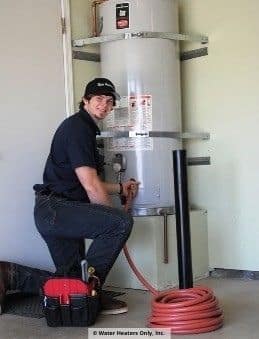
A happy water heater installation technician draining a water heater.

6. Drain or flush your water heater and complete an annual inspection. Maintaining your water heater is a very successful habit. It can affect life expectancy, energy efficiency and the safety of the unit over its lifetime. Once a year (maybe more often if there is a lot of sediment in your water) drain a few gallons out of the drain valve of your water heater. Use either a 5-gallon bucket or a garden hose and run it to a place where the hot water will not cause damage (do not drain it to your landscaping or lawn, hot water may kill the grass). If you notice a lot of sediment or debris then we recommend a full flush. This is where you empty the tank completely of water, then turn the water back on while the drain is open and let the water flow for a minute or so to help remove any lingering sediment or debris. For instructions on how to drain a water heater click here. If you are water wise you can turn your thermostat to vacation and let the water cool down – then it can be used for watering and will not damage your plants. It is best to turn the unit to vacation in the morning, say before going to work. Then drain the tank when you come home, once it has refilled turn the thermostat back to the desired setting and you should have hot water in approximately 1 hour. While you are draining or flushing the tank inspect the water heater. Start with the top and check for any leaks or heavy corrosion on the water pipes and the T/P overflow valve. For gas water heaters check that the draft hood is in place and make sure it is placed properly with a few inches of air space between the tank and where the draft hood connects to the vent. Once you have visually inspected the top check around the tank, for electric water heaters look for any signs of leaking, rust streaks or residue around or coming from the upper and/or lower panels covering the electrical components on the tank. If you have a gas water heater inspect the gas line and gas parts look for any corrosion or wear on the piping. Check the thermostat for corrosion or black soot marks. Inspect the area below the gas thermostat where the gas chamber is. If you noticed any back residue, soot or charred metal, this is a sign you may be having combustion issues and you should have the unit serviced by a professional. If you ever smell gas turn off the gas supply and contact a professional. Your visual inspection is complete if everything looks like it is in good shape your done, if you have concerns or think there are items that need service contact your local Water Heaters Only, Inc

7. Keep a Water Heaters Only, Inc emergency shut down sticker on your water heater. When you have problems with your unit, the sticker can help walk you through shutting of the gas and water and it has our 24-hour emergency phone number so you can give us a call if you are not sure what to do next or if you are having a problem with turning anything off. If you need a Water Heaters Only, Inc shut down sticker – email help@waterheatersonly.com and we are happy to mail one to you.

Have questions about maintaining your water heater? Give us a call 24/7 at [phone-local]

By John Heaters Google+ | Facebook

Water Heater Fire Safety Tips

TOP 5 WATER HEATER FIRE SAFETY TIPS DO’S AND DONT’S

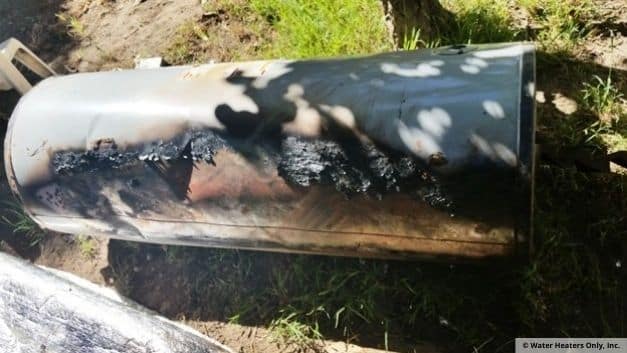
As the California Wildfire Season continues to rage, it was just announced by Cal Fire that the Rocky Fire, which was located in Lake County near Clear Lake in Northern California, was caused by a faulty water heater. The Rocky Fire began on July 29th and burned nearly 70,000 acres over a two-week period and it destroyed 43 homes and caused hundreds of residents to evacuate.

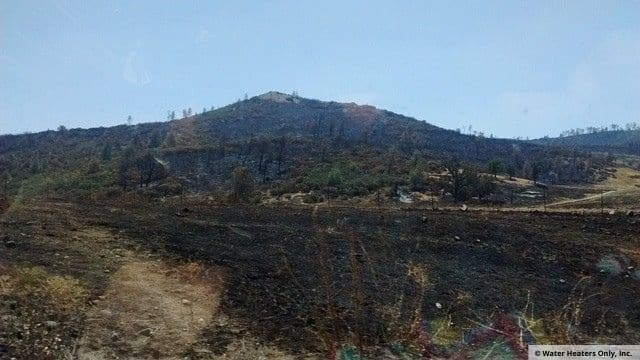
The aftermath of a California wildfire

Evidently, the water heater was located in an outside structure and was surrounded by flammable liquids, which helped cause the fire to really get moving and growing. Read our top 5 water heater fire safety tips and use the best practices to limit possible fire damage caused by your water heater.

California Fire Department on the scene.

Though it may seem unusual that the fire was caused by a faulty water heater, the fact is that hundreds of homes fires have been caused by water heaters in one way or another. According to the National Fire Protection Association, during the 4-year span between 2007 and 2011, water heaters were responsible for 11 percent of fires started by home heating devices. Now, let’s be clear, this doesn’t mean that water heaters are inherently dangerous or some sort of ticking time bomb waiting to catch fire. These facts just remind us that improper use and neglect of your water heater could lead to problems down the road. So, we here at Water Heaters Only, Inc. thought this would be a good opportunity to share some helpful tips that could make all the difference when it comes to keeping you and your family safe from fire danger.

  1. GET YOUR WATER HEATER CHECKED ANNUALLY Most people don’t think about their water heater until they have to, meaning until it stops working or they discover a leak. But it pays to have a professional come over to your home once a year and make sure there are no problems with your water heater and check for any potential problems that might occur in the near future. During this check, something like a small gas leak may be discovered and corrected before it becomes a major fire hazard.
  2. KEEP FLAMMABLE MATERIALS AWAY FROM YOUR WATER HEATER – This cannot be stressed enough, especially in light of the fact that it was reported that the Rocky Fire was caused, in part, by flammable liquids that were kept near the water heater. These were ignited, thus helping to create this huge fire. So, make sure that flammable materials such as oily rags and even paint and gas cans are kept far away from your water heater.
  3. KNOW HOW TO SHUT YOUR WATER HEATER OFF – This is helpful for so many reasons, but it is especially helpful in regards to fire danger and prevention. That’s because if you happen to smell gas or discover a gas leak in your water heater, you will want to get the gas shut off as soon as possible. For complete instructions, go to our main website to watch a very informative video and to get detailed instructions for shutting down your water heater. Just click here. (Insert link here https://waterheatersonly.com/emergency-shutdown-instructions
  4. MAKE SURE THE AREA AROUND YOUR WATER HEATER IS CLEAR FROM DEBRIS – This point is connected to the previous point about flammable materials being stored next to the water heater. In general, the water heater needs “breathing room” so that there is plenty of ventilation available for the pilot assembly to burn properly. If the air flow is cut off by debris and clutter stacked around the water heater, this could cause the heater to not work properly and that could become a fire hazard.
  5. MAKE SURE THE AREA IS ALSO WELL VENTILATED, ESPECIALLY IF THERE ARE FLAMMABLE MATERIALS – Since many water heaters are located in the garage, there is a greater likelihood that the homeowner may use a flammable material in the vicinity at some point. This could be as a result of painting or using varnish or even filling your lawn mower with gas (we recommend you do all of these activities in a different area than your water heater. No matter what the situation, you always want to make sure that the area is well-ventilated so that there is no danger of the fumes combusting and causing a fire.

We hope these water heater fire safety tips has been informative and helped raise awareness about the potential fire hazards that can be avoided with some common sense, preventative measures. If you have any other questions, you can always call us at 833-379-8800 24 hours a day, 7 days a week and talk to one of our water heater experts. You can even arrange to have one of our technicians come out and inspect your water heater for you. And, of course, for more information about water heater safety and water heaters in general, you can always check out our FAQ’s.

By John Heaters Google + | Facebook

2015 Water Heater Energy Efficiency Changes

2015 Water Heater Energy Efficiency Changes

DOE 2015 Water Heater Energy Efficiency Changes Guidelines

It’s almost April 16th and that means the new Department of Energy 2015 water heater energy efficiency changes will be going into effect soon. These new guidelines were instituted as a way to reduce emissions and reduce energy usage, but they are having the unintended effect of raising the cost of water heaters and water heater installations.

When the new guidelines were introduced, it was feared that the cost in some situations might increase dramatically. However, now that the manufacturers have actually started manufacturing the newer models, it appears that, when it comes to the standard 30, 40 and 50 gallon gas water heaters, the cost for an average installation may only increase by roughly $100. Now, that may seem like a lot, but since it was initially presumed that costs may double in some situations, a small increase like that is far more preferable. The concern initially was that the new water heaters would be considerably bigger than the previous models and require a damper on gas vented models; luckily, the manufacturers were able to make water heaters that were legal under the new guidelines but that weren’t dramatically different in size or shape.

Size Comparison Example

TypeCurrent DiameterNew NECA Diameter
40 Gallon Gas1820
50 Gallon Gas2022
40 Gallon Electric1820
50 Gallon Electric2022

One other option to consider for those who don’t have the space to fit a wider gas model water heater is to get a gas water heater with a power damper. These models are thinner and, in fact, are even more energy efficient than the new standard gas models. If this seems like an option you might consider, you should know that these models are taller than the average gas water heater, meaning they will need more space available above the water heater. These water heaters also require an electrical outlet to be located nearby as the outlet is needed to power the damper. This means that you might need to have electrical work done in addition to having a new water heater installed.

It should be noted, though, that there will be certain situations (albeit a very small percentage) where a homeowner may be faced with a very expensive water heater situation. For example, any electric water heaters over 55 gallons in size will now be required to have a heat pump. These new electric heat pump water heaters require specific air space to work properly and this may cause the homeowner to relocate the water heater or redesign their water heating system. even put in additional air venting. If that is the case, the cost to install one of these water heaters could easily cost three thousand dollars or more. This may become a problem for homeowners where electric water heaters are more common like Arizona because there are a lot of electric water heaters that are located in small spaces.

Electric Water Heater Changes Quick Facts

  • Under 55 gallons will increase in diameter by about two inches
  • Over 55 gallons will now be a heat pump style unit
  • Heat pump units require a certain amount of air space to operate properly

For homes with electric water heaters under 55 gallons in size, the costs will not be nearly as dramatic, though there will be a cost increase. Basically, all of the residential electric water heaters in this size category are 2 inches wider. This means a 40 gallon electric water heater will now be as wide as a 50 gallon electric used to be. This may not seem like a huge increase, but for those homes where the water heater is located in an inside closet with very little extra room, this may cause some problems. In that situation, a homeowner can either get a smaller sized water heater i.e. go from a 50 gallon down to a 40 gallon water heater or they can have the water heater moved to a different location or they can increase the size of the current location. Both of these latter options could result in very costly construction being done to the home. There is one other option for homeowners who just can’t increase the size of the closet or room where the water heater is located: certain manufacturers are planning to offer a thinner version of these electric water heaters that will come with a custom-made insulation blanket, these units can be special ordered and will cost more, but it may be worth waiting a little longer for hot vs paying for reconstructing the closet.

5 Quick Facts About The 2015 Water Heater Energy Efficiency Changes

  • All water heaters will be more efficient and cost less to operate
  • Gas and electric water heaters will be wider
  • Prices will increase for the new models, but not as much as first expected
  • Water heaters above 55 gallons will be affected the most
  • A small percent of units may require relocation when next replaced

Hopefully this basic information will help homeowners to better understand these new energy guidelines and the effect they may have on them. We understand it may seem a little overwhelming, so we urge you to give us a call at 833-379-8800 and we will be happy to help you decide what’s best for you and your situation. This is also why we are encouraging people who currently have electric water heaters – or who have gas water heaters that are located in very tight locations – that are over 8 years old to consider replacing their water heater now before these changes take effect.

The reason for this is that water heaters usually last 8-10 years, so if your water heater is older than 8 years, it might be getting ready to go out. If you don’t know how old your water heater is, you can always look at either your original receipt of purchase or installation or you can check the manufacturer’s sticker located on your water heater. However, please note that sometimes that information is still hard to glean because different manufacturers use different methods of dating their products. Once again, if you have any questions, please feel free to call us at 833-379-8800 and a water heater specialist will be happy to help you discover the age of your water heater. We can then even come out and take a look at your current water heater and see where it is located and further discuss your options.

For more information and calculations about the new 2015 Water Heater Energy Efficiency Changes guidelines, here is a link to the United States Department of Energy website where the energy guidelines can be found.

By John Heaters Google + | Facebook

Turn Off The Gas Supply To The Water Heater

How Do I Turn Off The Gas Supply To The Water Heater

the gas shut off valve to a water heater

How do I turn off the gas supply to the water heater? This is one question we are frequently asked by our customers. It is a great question and one that every homeowner should be educated in, just in case problems arise with their water heater.

You might smell gas coming from your water heater, it might not be performing as usual or it the water heater may be leaking and it would be a good idea to know how to turn off the gas.

The gas can be turned off from the outside gas meter, which shuts off all gas to the house or at the water heater itself, which just turns off the gas supply to the water heater. Knowing how to shut off the gas from both places can really come in handy.

To turn off the gas supply to the water heater:

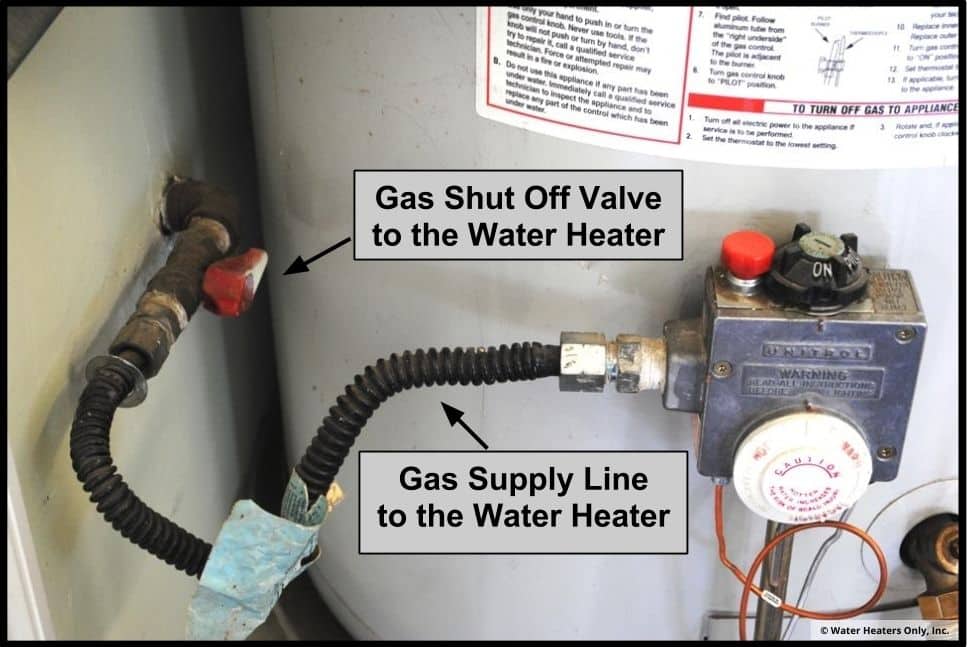
All appliances that require water or gas have a separate shut of valve usually within a few feet of the appliance. To find a water heaters’ gas shut off valve look for a single handle valve that would usually be located at the bottom of the unit about a foot or two out. The valve will look similar to the one in the image below.

the anatomy of the gas line on a water heater.

Turn this valve in the clockwise position to turn the gas off. If you can’t get the gas valve to turn, can’t find the gas valve, or if there are any other problems, there is a second option which is to turn the gas off to the whole house.

To turn off the gas supply to the whole house:

Finding the gas meter shut off valve can sounds daunting, but it can actually be pretty simple. The gas meter shut off is located right next to the gas meter that is found on the exterior of the house as shown below. The gas valve is on when it is parallel to the incoming gas line. When the valve is turned a quarter turn so that it is perpendicular, then the gas line is closed and the flow of gas is off. Typically, this valve can only be opened and closed with a wrench. In case of emergency or if you smell gas, exit the home and contact your gas provider.

If you are concerned about how to turn off the gas supply to the water heater or any of the signs above you can call and speak with a water heater expert 24 hours a day 833-379-8800 or check our FAQ’s to read more about common water heater problems.

By John Heaters Google + | Facebook

Water Heater Tips

Water Heater Tips

Winter Water Heater Tips, Tricks & Solutions

Are you not getting enough hot water from your water heater?

Have you noticed that recently your water isn’t as hot as it used to be?

Maybe it’s time to turn up the temperature on your water heater. It is common when winter comes along to start to run out of hot water or notice you don’t have as much hot water as you used to. 

When the ground temperature changes and gets colder the incoming cold water temperature also gets colder and most water heaters have to work a little harder to heat up your water. Once the water is hot and you start to use it, the cold water coming into the tank mixes with the hot water and your hot water cools down. This is especially true when you have an older water heater that has sediment build up. The sediment will leech the heat out of the water quickly. Most people also enjoy a longer hot shower in the winter months, due to the colder temperatures. There is a simple answer when you want hotter water during the winter months. Check where the thermostat on your water heater is set and turn up the temperature.

For gas water heaters the thermostat is the small box sticking out of the front of the water heater, you will notice there is a red dial and maybe a button or two. You will notice a notch and then “A” “B” and “C” settings. If your water heater is set to the recommended 120 degree setting (small white notch on the front dial), you can turn the temperature up slightly to 125 or 130 and you should notice a big difference – just beware of hot water scalding, especially if there are children or seniors in the home who skin is more sensitive and easy to burn. Run a test about 1/2 hour later and see if your water is hotter. Once you have tested the water temperature and you are satisfied you can enjoy hot water all winter long. Try to set a reminder to turn the temperature down again in the spring or like our Facebook page and we will remind you when spring comes along, you’ll get our valuable water heater tips and tricks all year long!.

For electric water heaters you will have to remove the small top panel with a screwdriver and then turn the temperature dial inside the panel up. Be careful working on the inside of the water heater when the power is on, we recommend you refer to your owners manual for instructions and diagrams. Please contact us at [phone-local] if you have any questions about increasing the temperature off your water heater and enjoy our upcoming winter water heater tips in our monthly blog!

Water Heaters Only San Jose

Water Heaters Only San Jose – In The Community

Water Heaters Only San Jose at the San Jose Fall & Garden Home Show

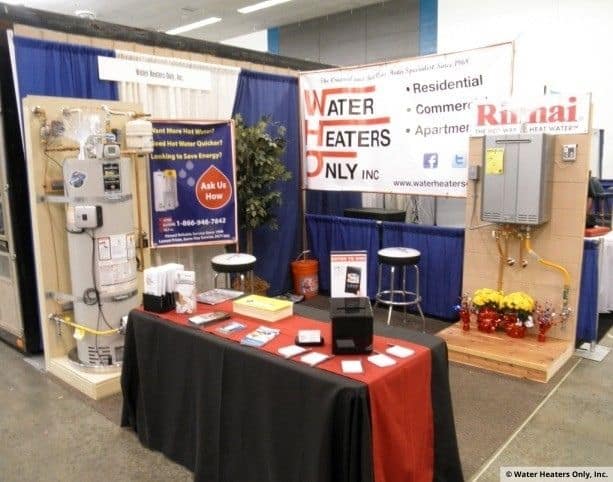
The water heaters only booth at a trade show in San Jose.

Home shows are a great venue for us to interact with the local community. Recently, Water Heaters Only, Inc hosted an exhibit at the San Jose Fall Home and Garden Show Nov 2, 3 & 4th at the San Jose Convention Center. It was an opportunity to showcase new water heater products and technology to the local community. Both our water heater displays received a lot of attention.

With all the design changes to water heaters and new energy efficient technology being able to educate homeowners on what products save the most energy or provide more hot water was a great way for us to interact. Over the three day period hundred of attendees stopped by to ask questions or find out more information about what is available in today’s market.

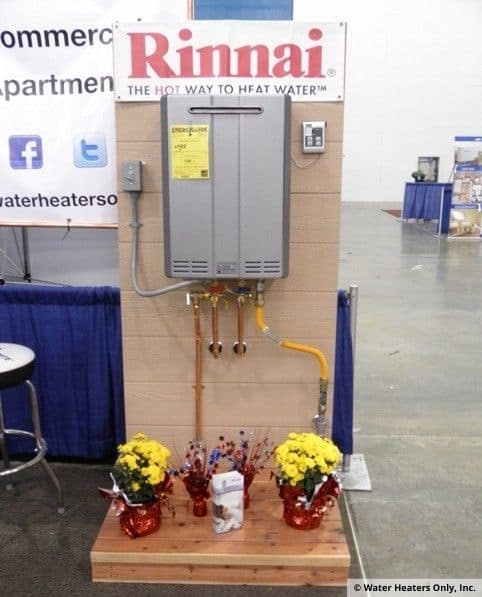
Our tankless water heater display for tradeshows.

Our tankless water heater display was very popular. Tankless water heaters have been gaining in popularity for the past decade and Water Heaters Only, Inc has been installing tankless water heater for at least that long. While a tankless water heater might not be right for every home or budget, they are great at saving space, providing endless hot water and saving slightly on energy costs. This display showcases an external vent Rinnai tankless water heater installed on an outside wall. The homeowners we spoke with told us being able to see the unit with the plumbing attached help them understand how a tankless may work best for their home.

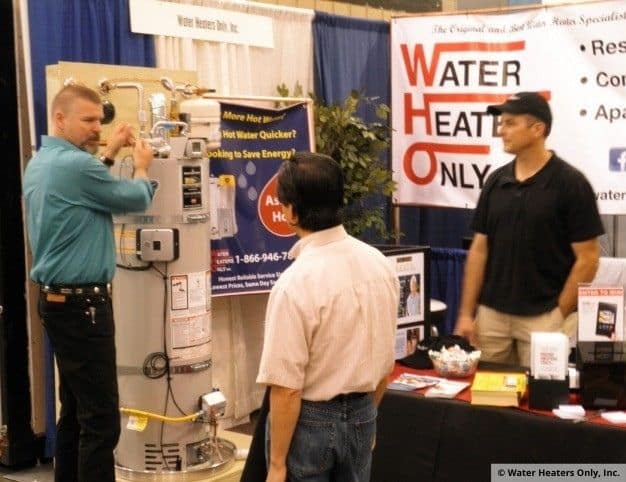
Showing off our water heater display at a tradeshow.

Here our staff is explaining how the new Performance Plus Package by Bradford White works when installed on a new residential tank Bradford White water heater. The Performance Plus Package offers a water and gas shut off valve and timer control module that works in conjunction with the smart Icon gas control valve on the new Bradford White water heaters. These accessories give options for making a water heater safer and more energy efficient.

For example you can place a water sensor in the pan with your water heater and when the sensor detects water it will automatically shut off the gas and the water to the water heater, limiting the amount of damage that can occur to the home. The timer option allows a owner to determine when the water heater will heat up. For instance if you spend long hours away from your house and only use hot water during the mornings and evenings. You can set a timer to heat the tank at those times. This can help save energy and money on gas bills. The best option is the flexibility the new Performance Plus Package offers, you do not need to use the timer, but it is available if you choose.

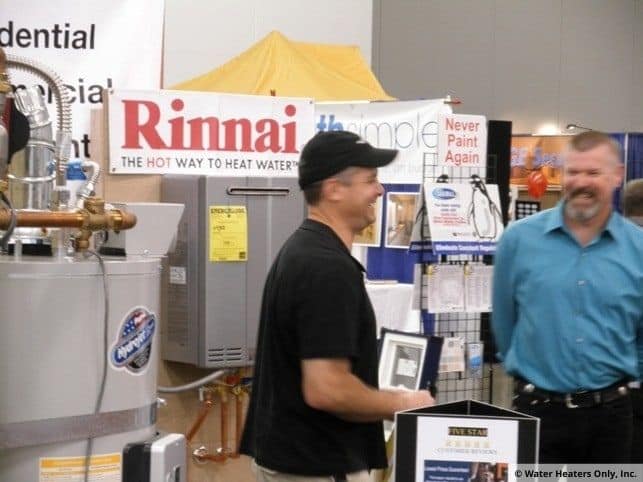
Hanging out with our loyal customers

Water Heaters Only, Inc appreciates all the visitors to our booth and thanks everyone for stopping by. It was 3 full days of intelligent conversations, giveaways and community interaction at the 2012 San Jose Fall and Garden show. If you have any questions about water heating products or options available call 24 hours a day 833-379-8800, we look forward to hearing from you.

By John Heaters Google+ | Facebook