IT’S TIME FOR SPRING CLEANING

SPRING CLEANING

Spring is here and that means it’s time for Spring Cleaning! It may not be fun but it feels good when it’s done and it is necessary after a long winter in and especially with all the time most people have spent inside recently. Of course, everyone knows how to deep clean their homes but not everyone thinks of cleaning the outside. So we have a few ideas for cleaning that you may not think of and that can really add some sparkle to your home.

PRESSURE WASHING

Not everyone has a pressure washer, but you can rent one for relatively cheap and it is a great way to clean off areas that may get neglected. Here a few areas that can look much better after a good pressure washing:

  • Driveways
  • Patios and decks
  • The outside walls of your home

As with any tool, make sure to read the directions before use and know that not everything can be pressure washed including electrical light fixtures. Also, know that there is pressure washing and power washing. The difference is that power washing uses heat as well to really help deep clean. Power washing is good for cleaning driveways and cement walkways.

PAINTING

After a good deep cleaning with the pressure washer, nothing helps perk up the outside of your house like a new coat of paint. We know that painting the outside of your home can be a major chore, but most experts recommend repainting your home every 4-6 years depending on where you live. That may not always be feasible, but if it’s been more than 10 years you may want to consider it.

However, if repainting your home is just too big of a task right now, consider other areas that may be in need of a touch up. After pressure washing your deck, it would be a good time to sand it down and add a new coat of weather-resistant paint or stain. Also, consider your formerly white picket fence that is looking a little worse for wear. A cleaned up and freshly painted fence can really make your whole home look brighter.

LANDSCAPING

Okay, this may not officially be cleaning, but it’s close and a well-maintained yard just feels and looks nice. And we’re not just talking about mowing the lawn or whacking the weeds, either. Consider adding a water fountain or some new plants that may help to create a nice sitting area. Remember to also find plants that are suited for the climate you live in so that they have the best chance to survive. Maybe add some solar lights along a path or just place some throughout the yard. Trim those crazy long branches and make sure your hedges look good, too. All of these will help make your yard look better and really add some style and “Wow” factor to your home (see top photo for proof).

Hopefully, these outside spring cleaning ideas will help give your home a nice touch-up. Of course, we’re not suggesting you ignore the inside of your home. And while we’re at it, don’t forget about your water heater because we didn’t! We are Water Heaters Only, Inc., so it makes sense that we would mention the water heater. Spring cleaning is a good time to make sure your water heater is clean as well. Check it for dust and rust and also take a moment to check for any small leaks that may have gone unnoticed. Now is also a good time to make sure that there isn’t a bunch of stuff piled up too close to the water heater. This can affect its performance and even be a fire hazard depending on what is stored by it. A three foot clearance is a good start. For more water heater tips, check out our blog here. If you have any other questions about your water heater, don’t hesitate to give us a call 24/7/365. Happy Spring Cleaning!

Interested in learning how to flush your water heater? Click here to learn more about water heater maintenance, or give us a call at [phone-local]
Water Heater Habits

7 Habits of Highly Successful Water Heater Owners

Water Heater Maintenance Tips

Out with the old and in with the new!

Have you thought much about your water heater lately? Most people do not think much about their water heater until they have a problem. Typically the first thing that is noticed is a lack of hot water, and then the investigating begins. Here are 7 tips that can help you become a successful water heater owner and keep you one step ahead so you do not end up spending valuable time dealing with a broken water heater. The benefit of being a successful water heater owner is longer tank life expectancy, lower energy bills, and the potential for little or no damage to occur as a result of water leakage. Also, being prepared with information will make the entire process easier when your tank needs to be repaired or replaced.

1. Know where your water heater is located and have clear access to reach it. This may sound simple, but sometimes it’s tucked away in an attic or basement and not easy to reach and after many years since a water heater is not something people often think about it can be forgotten – until there is no hot water.

2. Know what type of water heater you have, ie. natural gas, electric, propane or solar. Also knowing whether you have a storage tank type (hint: this is the most common type) or a tankless type water heater is helpful. Write down the model number and serial number of your water heater or at least know where this information is on the tank, it has the age and gallon capacity coded into it and is important for warranty purposes.

3. Know how to turn off the fuel or power supply to your water heater, once you know which type of unit you have, make sure you know how to turn off the gas or electricity to the unit. There should be a gas valve or a disconnect switch within a few feet of the water heater. It’s also a good idea to know where your main gas shut off valve is or which breaker is for the water heater in case the shut off near the water heater doesn’t work. If you need any special tools to turn the valves off or to open the break box keep those nearby and in clear sight. When you have water leaking all over it’s easy to panic, especially if it’s causing damage. Doing a little upfront work so you are prepared will make a big difference in this situation.

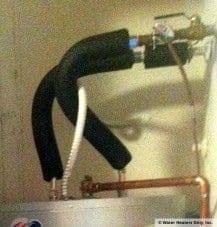
Insulation on the hot and cold lines of a newly installed water heater.

4. Know where the water shut off valve to the water heater is. Again, if you need special tools to turn the valve off have them nearby along with a stepladder in case the valve is above the water heater and you need to turn the water off quickly. Most shut off valves are located above the water heater on the cold side piping. See our blog post – How to turn off a leaking water if your not sure where your valve is.

5. Make sure the area around your water heater is clear and do not store anything with a few feet of your unit. This is a successful habit for a few reasons. First, if you have a gas fired (natural gas or propane) unit the water heater needs to “breath”. As the burner fires it need oxygen to burn the gas. When a water heater is smothered or does not have enough oxygen it can affect the efficiency of the unit, cause damage to the burner chamber and other water heater parts and even cause carbon monoxide leaks. Second, whether it is gas or electric if the unit starts to leak the water can be hidden from view or soak into what is being stored around it. This can cause a prolonged leak, which has the potential to cause more water damage and cause to water heater to reheat itself more often, wasting energy. Lastly, it is a fire hazard.

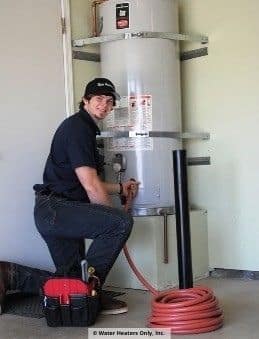
A happy water heater installation technician draining a water heater.

6. Drain or flush your water heater and complete an annual inspection. Maintaining your water heater is a very successful habit. It can affect life expectancy, energy efficiency and the safety of the unit over its lifetime. Once a year (maybe more often if there is a lot of sediment in your water) drain a few gallons out of the drain valve of your water heater. Use either a 5-gallon bucket or a garden hose and run it to a place where the hot water will not cause damage (do not drain it to your landscaping or lawn, hot water may kill the grass). If you notice a lot of sediment or debris then we recommend a full flush. This is where you empty the tank completely of water, then turn the water back on while the drain is open and let the water flow for a minute or so to help remove any lingering sediment or debris. For instructions on how to drain a water heater click here. If you are water wise you can turn your thermostat to vacation and let the water cool down – then it can be used for watering and will not damage your plants. It is best to turn the unit to vacation in the morning, say before going to work. Then drain the tank when you come home, once it has refilled turn the thermostat back to the desired setting and you should have hot water in approximately 1 hour. While you are draining or flushing the tank inspect the water heater. Start with the top and check for any leaks or heavy corrosion on the water pipes and the T/P overflow valve. For gas water heaters check that the draft hood is in place and make sure it is placed properly with a few inches of air space between the tank and where the draft hood connects to the vent. Once you have visually inspected the top check around the tank, for electric water heaters look for any signs of leaking, rust streaks or residue around or coming from the upper and/or lower panels covering the electrical components on the tank. If you have a gas water heater inspect the gas line and gas parts look for any corrosion or wear on the piping. Check the thermostat for corrosion or black soot marks. Inspect the area below the gas thermostat where the gas chamber is. If you noticed any back residue, soot or charred metal, this is a sign you may be having combustion issues and you should have the unit serviced by a professional. If you ever smell gas turn off the gas supply and contact a professional. Your visual inspection is complete if everything looks like it is in good shape your done, if you have concerns or think there are items that need service contact your local Water Heaters Only, Inc

7. Keep a Water Heaters Only, Inc emergency shut down sticker on your water heater. When you have problems with your unit, the sticker can help walk you through shutting of the gas and water and it has our 24-hour emergency phone number so you can give us a call if you are not sure what to do next or if you are having a problem with turning anything off. If you need a Water Heaters Only, Inc shut down sticker – email help@waterheatersonly.com and we are happy to mail one to you.

Have questions about maintaining your water heater? Give us a call 24/7 at [phone-local]

By John Heaters Google+ | Facebook

Turn Off The Gas Supply To The Water Heater

How Do I Turn Off The Gas Supply To The Water Heater

the gas shut off valve to a water heater

How do I turn off the gas supply to the water heater? This is one question we are frequently asked by our customers. It is a great question and one that every homeowner should be educated in, just in case problems arise with their water heater.

You might smell gas coming from your water heater, it might not be performing as usual or it the water heater may be leaking and it would be a good idea to know how to turn off the gas.

The gas can be turned off from the outside gas meter, which shuts off all gas to the house or at the water heater itself, which just turns off the gas supply to the water heater. Knowing how to shut off the gas from both places can really come in handy.

To turn off the gas supply to the water heater:

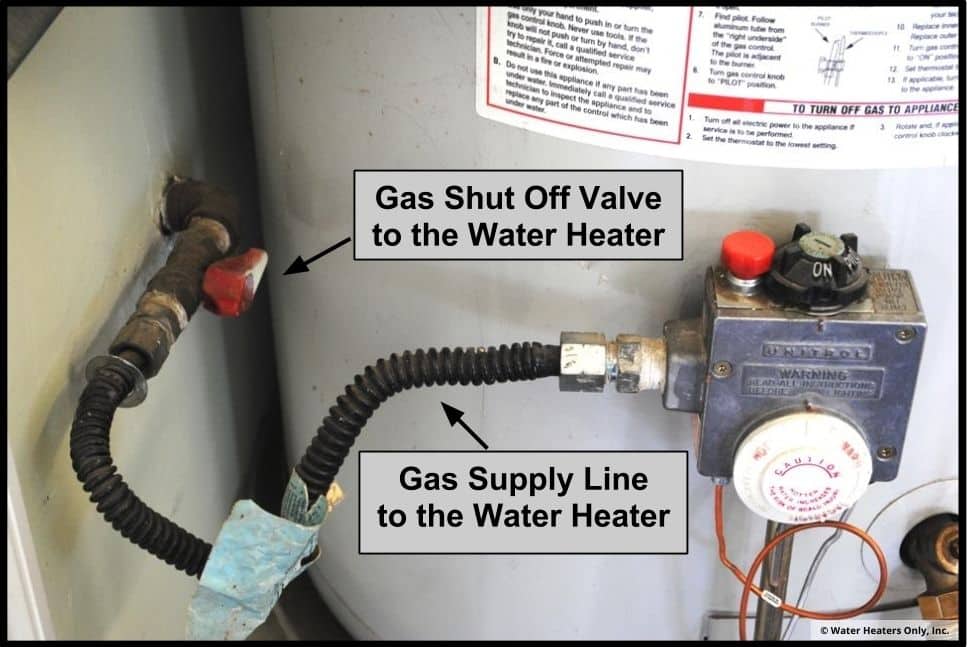
All appliances that require water or gas have a separate shut of valve usually within a few feet of the appliance. To find a water heaters’ gas shut off valve look for a single handle valve that would usually be located at the bottom of the unit about a foot or two out. The valve will look similar to the one in the image below.

the anatomy of the gas line on a water heater.

Turn this valve in the clockwise position to turn the gas off. If you can’t get the gas valve to turn, can’t find the gas valve, or if there are any other problems, there is a second option which is to turn the gas off to the whole house.

To turn off the gas supply to the whole house:

Finding the gas meter shut off valve can sounds daunting, but it can actually be pretty simple. The gas meter shut off is located right next to the gas meter that is found on the exterior of the house as shown below. The gas valve is on when it is parallel to the incoming gas line. When the valve is turned a quarter turn so that it is perpendicular, then the gas line is closed and the flow of gas is off. Typically, this valve can only be opened and closed with a wrench. In case of emergency or if you smell gas, exit the home and contact your gas provider.

If you are concerned about how to turn off the gas supply to the water heater or any of the signs above you can call and speak with a water heater expert 24 hours a day 833-379-8800 or check our FAQ’s to read more about common water heater problems.

By John Heaters Google + | Facebook

Water Heater Tips

Water Heater Tips

Winter Water Heater Tips, Tricks & Solutions

Are you not getting enough hot water from your water heater?

Have you noticed that recently your water isn’t as hot as it used to be?

Maybe it’s time to turn up the temperature on your water heater. It is common when winter comes along to start to run out of hot water or notice you don’t have as muchhot water as you used to. 

When the ground temperature changes and gets colder the incoming cold water temperature also gets colder and most water heaters have to work a little harder to heat up your water. Once the water is hot and you start to use it, the cold water coming into the tank mixes with the hot water and your hot water cools down. This is especially true when you have an older water heater that has sediment build up. The sediment will leech the heat out of the water quickly. Most people also enjoy a longer hot shower in the winter months, due to the colder temperatures. There is a simple answer when you want hotter water during the winter months. Check where the thermostat on your water heater is set and turn up the temperature.

For gas water heaters the thermostat is the small box sticking out of the front of the water heater, you will notice there is a red dial and maybe a button or two. You will notice a notch and then “A” “B” and “C” settings. If your water heater is set to the recommended 120 degree setting (small white notch on the front dial), you can turn the temperature up slightly to 125 or 130 and you should notice a big difference – just beware of hot water scalding, especially if there are children or seniors in the home who skin is more sensitive and easy to burn. Run a test about 1/2 hour later and see if your water is hotter. Once you have tested the water temperature and you are satisfied you can enjoy hot water all winter long. Try to set a reminder to turn the temperature down again in the spring or like our Facebook page and we will remind you when spring comes along, you’ll get our valuable water heater tips and tricks all year long!.

For electric water heaters you will have to remove the small top panel with a screwdriver and then turn the temperature dial inside the panel up. Be careful working on the inside of the water heater when the power is on, we recommend you refer to your owners manual for instructions and diagrams. Please contact us at [phone-local] if you have any questions about increasing the temperature off your water heater and enjoy our upcoming winter water heater tips in our monthly blog!